

Kemper · Stain
Kemper Thatch Kitchen Cabinets
Offered in the Kemper Echo, Choice and Emerge series
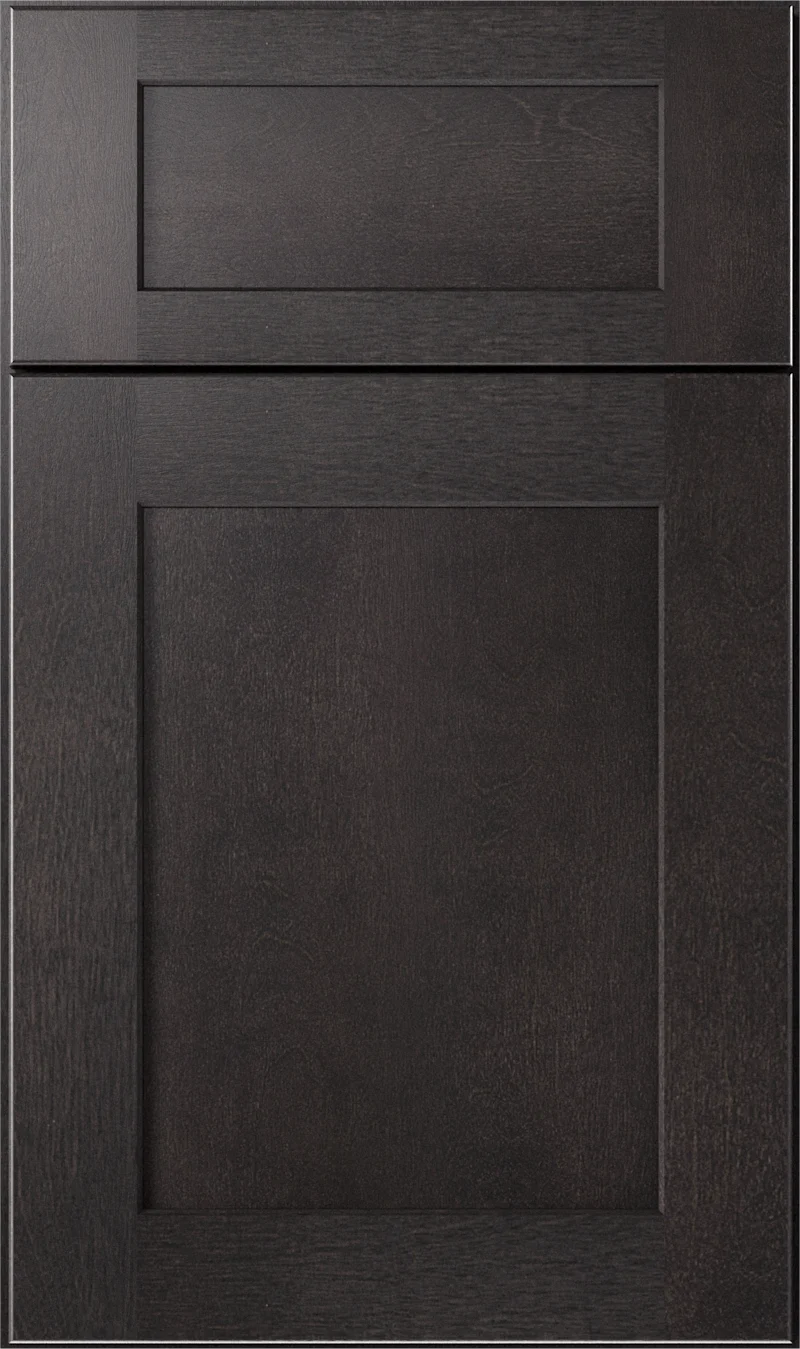
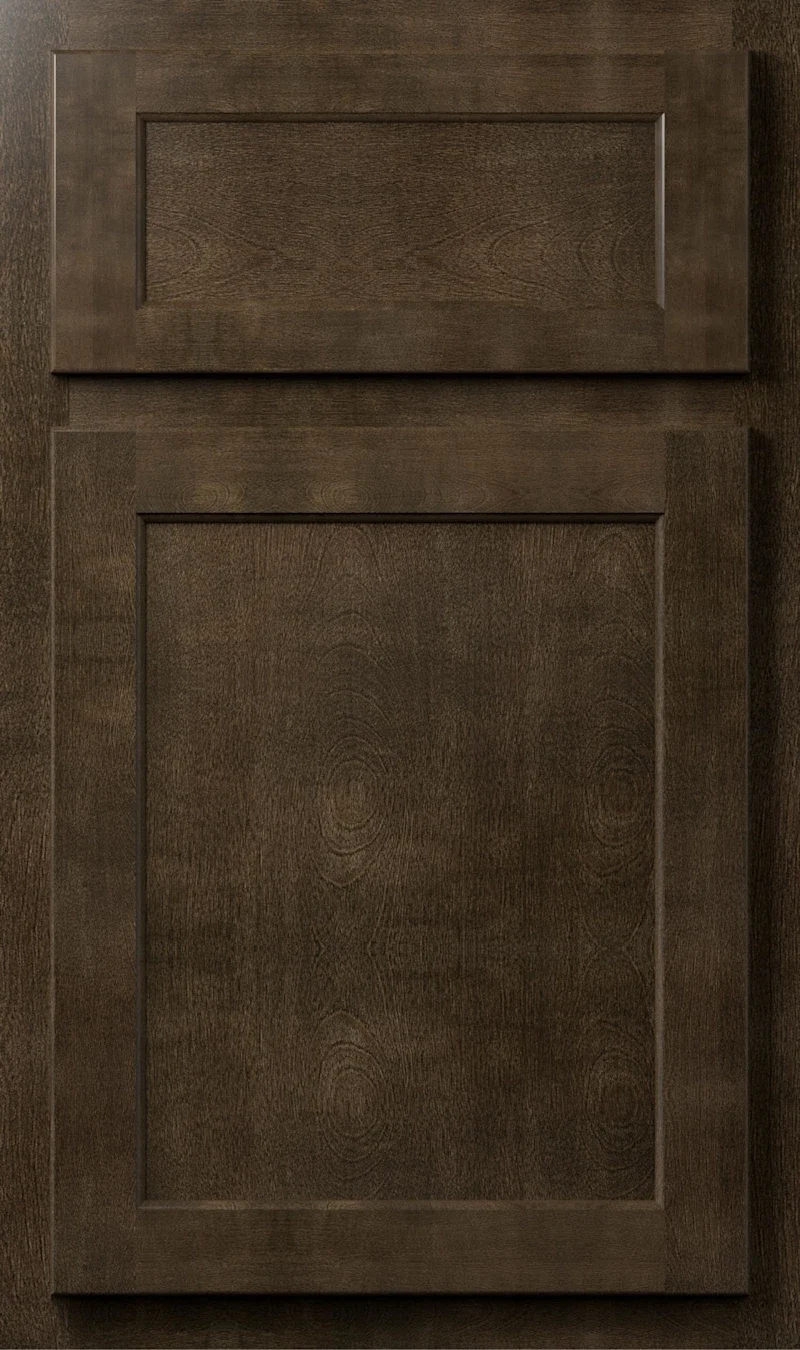
Think of strong coffee with the milk barely stirred in. Thatch runs dark and close to solid, with so little grain showing that it behaves more like a deep paint than a typical stain. It suits people who want a dark kitchen with a warm edge rather than a cold, graphite one.
- Brand
- Kemper
- Finish
- Stain
- Availability
- Made to order
Color & Look
Depth comes first here: this is genuinely dark, well below the halfway mark, and it holds that darkness even in full sun. The undertone is warm brown with a faint red pull, the kind you notice at the edge of the sample rather than in the middle. There is no gray in it and no black. Beside a charcoal-brown stain, Thatch looks softer and browner; beside a red-brown cherry stain, it looks restrained.
In a north-facing kitchen Thatch turns matte and sober, closer to bitter chocolate, and the corners of the room will go noticeably darker than the run nearest the window. South and west light brings out the red and gives the surface some life. Under warm bulbs at night it reads warmer still. The one thing to plan for is how little light it gives back — whatever brightness the room has must come from the counters, walls and tile.
What sets Thatch apart from most dark stains is how even it is. The grain is faint, visible as a soft vertical movement rather than as distinct lines, so large flat areas look smooth and uniform. That makes it easy to mistake for a dark brown painted finish in photographs, and customers regularly do. It also means fingerprints and dust show a little more than they would on a heavily grained finish, which is worth knowing before you commit to a whole kitchen.
Construction & Quality
Kemper has been making cabinetry in America since 1926 and is part of the MasterBrand family. Offered in the Kemper Echo, Choice and Emerge series.
Emerge is Kemper’s most personalized series: all-plywood construction, custom sizing, and a choice of full-overlay, inset or beaded-inset doors, with specialty finishes, stain and glaze options and multiple edge profiles.
Kemper backs its cabinetry with a limited lifetime warranty; coverage and terms are set by Kemper.
Where It Works
Full-height Thatch belongs in a room with serious daylight, or a room you are happy to keep dramatic. In a large kitchen with big windows, running it everywhere reads as a deliberate, enveloping choice. In an average kitchen we more often use it on the island and the perimeter bases, with white or cream above, which keeps the drama and the light. On a run of tall pantry cabinets it makes a clean, quiet wall.
The smooth surface suits simple door styles and modern hardware, though it is equally at home in a traditional room where the moulding does the talking. Away from the kitchen, a Thatch vanity in a small bath is a good gamble: the space is small enough that the depth feels intentional. It also holds up visually in a bar, a butler’s pantry or a study, where a darker enclosure is usually the goal rather than the risk.
Pairing Ideas
Countertops
Bright white gives the cleanest break. MSI Travataj is the plainest of them, a near-solid white with no competing pattern. If you want veining, MSI Calacatta Premata and MSI Carrara Trigato both read crisp against this much depth. For a warmer room, MSI Kalahari in cream or MSI Bianco Antico granite soften the contrast without muddying it.
Countertops we carry →Backsplash
Gray glass keeps the room from splitting into pure black and white. MSI Ombre Grigia Glass or MSI Ravello Mini Stack Polished sit between the cabinetry and a white counter and calm the whole wall. If you prefer maximum brightness, MSI Delano Blanco 6mm in white is the right pick; it throws light back into a room that Thatch will otherwise absorb.
Backsplash tile →Hardware
Warm metals flatter the red in this stain. The Berenson Swagger 96mm in brushed gold and the Berenson 128mm Champagne Bar Pull both pick up its warmth. Bronze, in the Berenson Swagger 160mm, goes nearly tone-on-tone for a subtler look. Matte black all but disappears on Thatch, so use it only where you want hardware to go unnoticed.
Pulls & knobs →Floors
Go lighter than the cabinets. A mid-tone engineered hardwood with visible grain gives the room the pattern the cabinetry does not have. Avoid dark on dark unless the room is very bright — Thatch and an espresso-toned floor together will swallow the space. Pale porcelain tile or a light oak-look LVP both give the value break this color needs.
Flooring →Frequently Asked Questions







Plan a Kitchen in Thatch
Tell us about your room and we will help you decide whether Thatch is the right call, then design, order and install it.
Or call: (630) 733-7700