

Kemper · Glazed paint
Kemper Meringue Kitchen Cabinets
Offered in the Kemper Emerge series
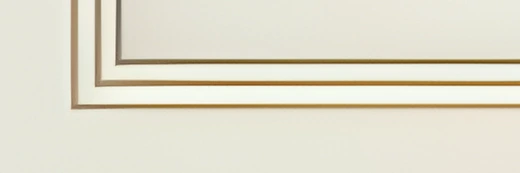
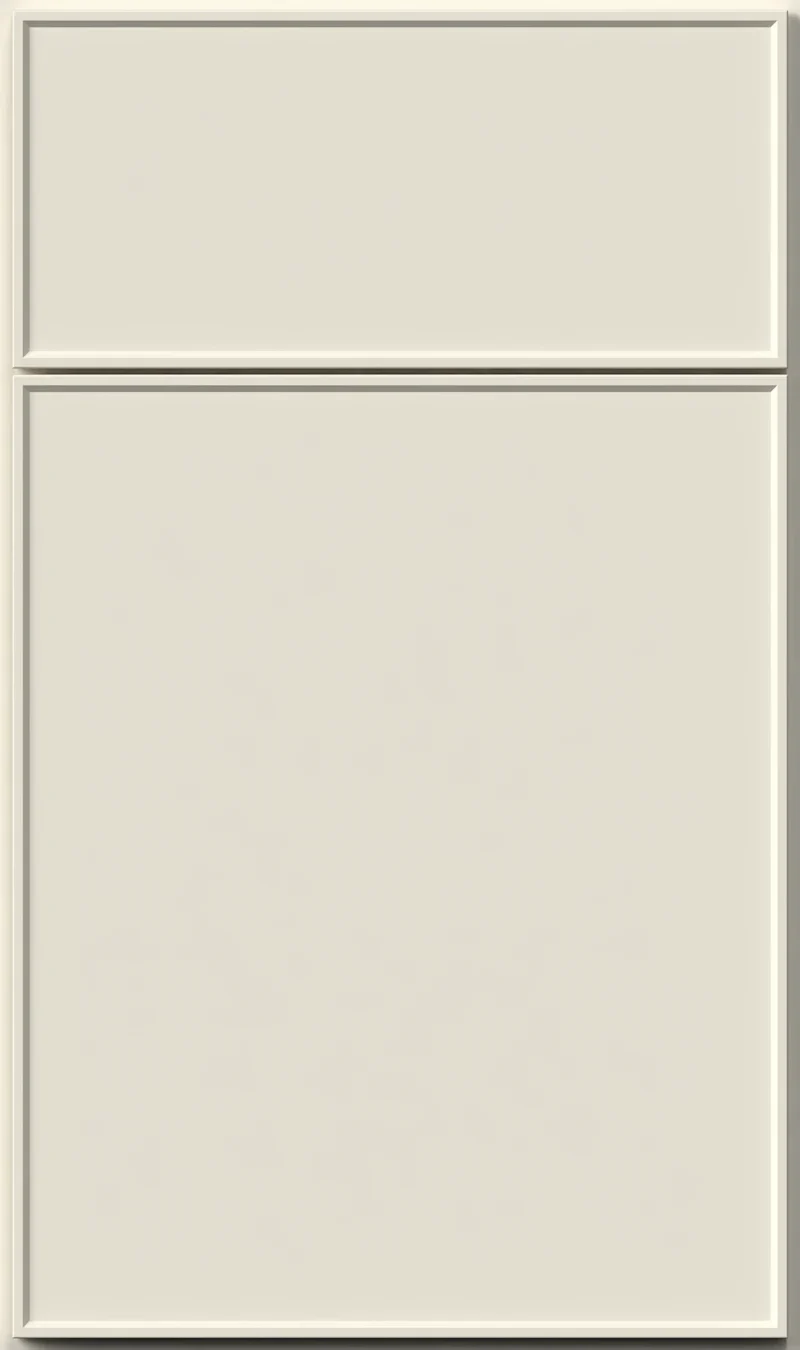
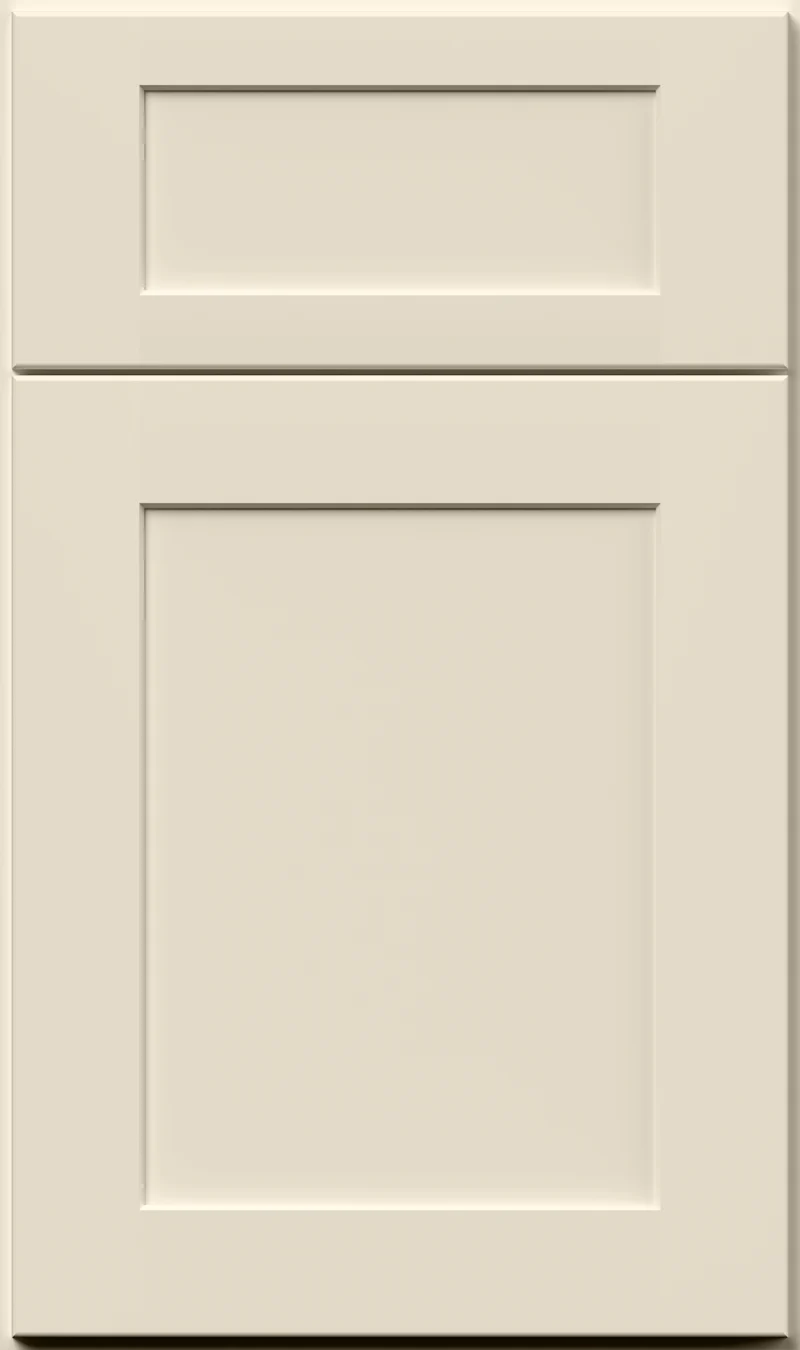
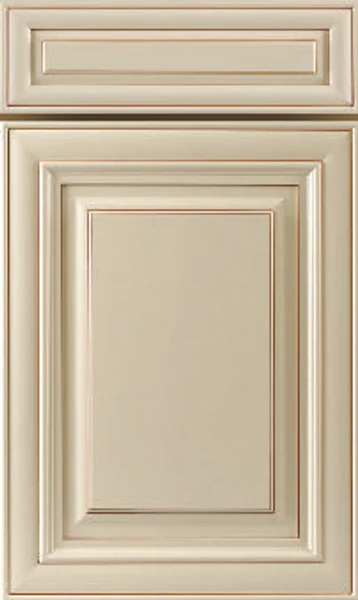
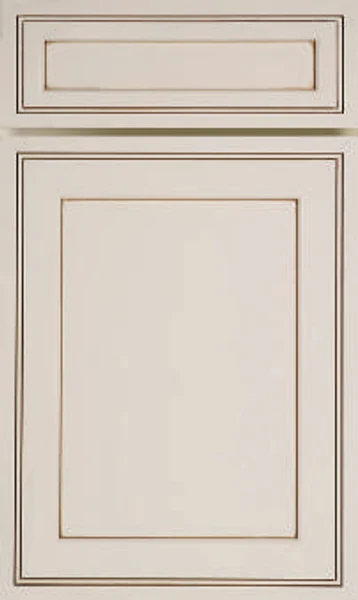
A glaze, not a solid color: Meringue puts a pale cream base under a soft honey glaze that is wiped into the profile lines and edges. The face of the door stays light while the detail work goes darker. It suits traditional kitchens that want a hand-finished look without heavy contrast.
- Brand
- Kemper
- Finish
- Glazed paint
- Availability
- Made to order
Color & Look
The base coat is a warm off-white, close to a soft cream, and the glaze is a light golden brown that only collects where the finish has somewhere to sit: profile lines, edges and corners. On the sample you can see the glaze reading as fine amber lines with a clear gradient beside them, while the broad areas stay pale. Averaged out, the finish measures lighter than it looks in photographs, because the dark work is confined to narrow bands.
In north light the glaze lines register as warm brown against a cooler cream, and that is the sharpest the contrast ever looks. South and west light lift the base so the glaze recedes into the overall warmth, and mid-afternoon it can read as one soft cream from across the room. Under warm bulbs at night the whole finish reads amber and the glaze all but disappears, since glazed finishes are always most visible in cool, even daylight.
It gets mistaken for a plain antique white until you look at an edge. The tell is the gradient: a painted color has a flat, uniform face, while a glazed finish shows the color deepening as it approaches every profile. Meringue is the gentlest of Kemper’s glazes in this range, because the glaze is honey-toned rather than brown and far lighter-handed than Toasted Almond, whose glaze lines read a clear russet.
Construction & Quality
Kemper has been making cabinetry in America since 1926 and is part of the MasterBrand family. Offered in the Kemper Emerge series.
Emerge is Kemper’s most personalized series: all-plywood construction, custom sizing, and a choice of full-overlay, inset or beaded-inset doors, with specialty finishes, stain and glaze options and multiple edge profiles.
Kemper backs its cabinetry with a limited lifetime warranty; coverage and terms are set by Kemper.
Where It Works
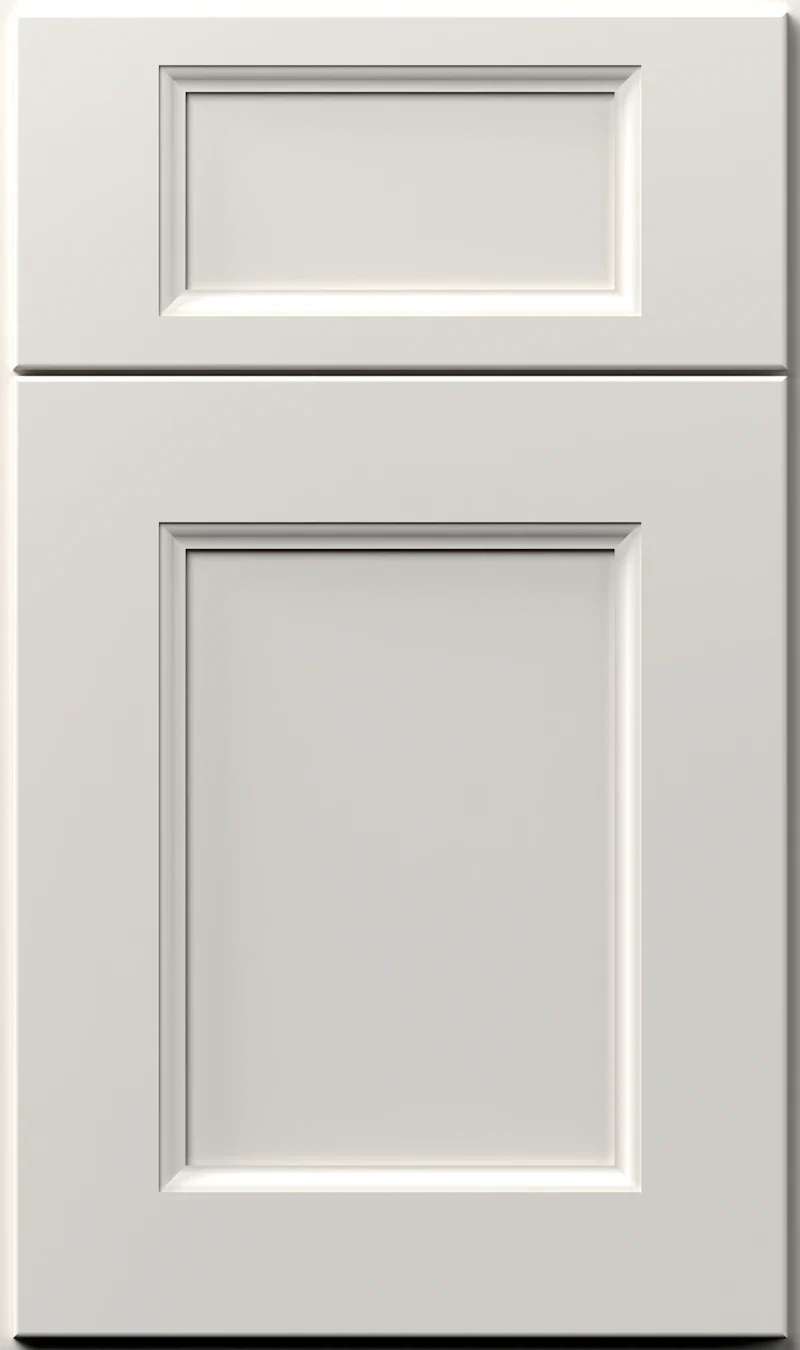
Glazed finishes belong on doors with something for the glaze to sit in, so raised panel, beaded inset and detailed shaker profiles get the most out of it, and a plain slab gives the glaze almost nowhere to go. As a whole-kitchen color it works in traditional rooms with decorative crown and furniture-style details. Used on an island alone, under lighter perimeter cabinets, it reads as a built-in piece of furniture.
The room needs reasonable light for the glaze to be legible, so a kitchen with a window or a well-lit island is the right setting. Beyond the kitchen, we have used glazed cream finishes on bath vanities and on a bar or butler’s pantry, where the detail suits the smaller scale. It is less at home in a laundry or mudroom, where the finish work is wasted on cabinets nobody stops to look at.
Pairing Ideas
Countertops
Cambria Brittanicca Gold Warm is the closest match in spirit, a cream quartz with marble-look veining carrying a gold note that echoes the glaze. Cambria Abbey in near-solid cream is the quieter option. If you want the counter to lift away from the doors, Cambria Torquay or Cambria Brittanicca give bright white with veining and plenty of contrast.
Countertops we carry →Backsplash
MSI Portico Pearl in cream subway is the natural tonal partner and keeps attention on the cabinetry. MSI Whisper White or MSI Stella La Perla 2X10 Glossy in white brighten the wall and make the glaze lines read more clearly. For a cooler counterweight, MSI Morning Fog in gray subway keeps the room from going entirely warm.
Backsplash tile →Hardware
Warm metals follow the glaze, so the Berenson 128mm Champagne Bar Pull and the Berenson Swagger 160mm MDB Pull in bronze both sit naturally against the profile detail. Vintage nickel, in the Berenson Epoch Edge 128mm pull, is a good middle path if you want something less golden. Matte black is possible, but it competes with the glaze lines rather than complementing them.
Pulls & knobs →Floors
Traditional hardwood is the natural partner, with oak or hickory in a mid to warm brown, in solid or engineered form. A distressed or wire-brushed surface suits a glazed finish particularly well, since both are about visible hand work. Porcelain tile in a travertine or limestone look is the durable alternative and stays inside the same warm palette.
Flooring →Frequently Asked Questions





Plan a Kitchen in Meringue
Tell us about your room and we will help you decide whether Meringue is the right call, then design, order and install it.
Or call: (630) 733-7700