
J&K · Stain
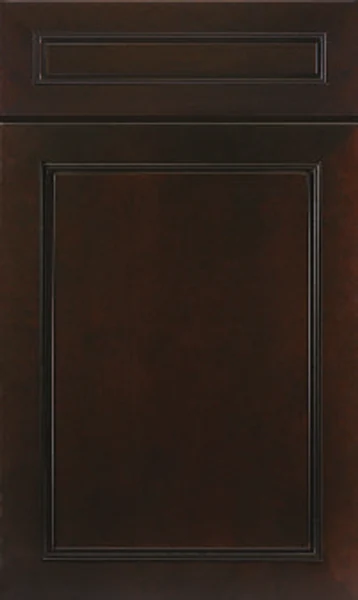
J&K Espresso Kitchen Cabinets
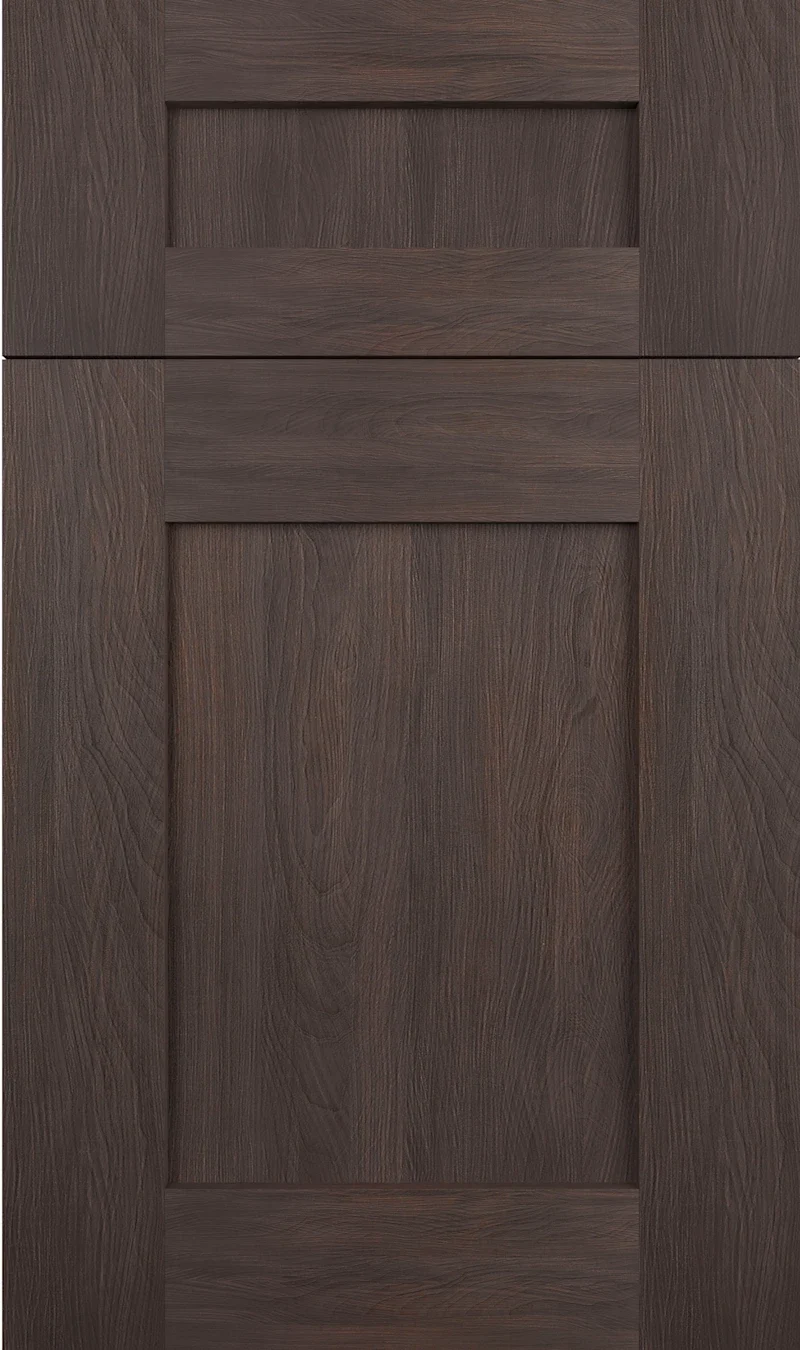
Available as door style K8 in J&K’s Transitional range
Espresso reads almost black from across the room, then warms to a deep red-brown once you are standing at the counter. It gives a kitchen weight and quiet rather than contrast, and it suits homeowners who like a dark, settled room. Generous light keeps it reading as brown.
- Brand
- J&K
- Finish
- Stain
- Availability
- Made to order
Color & Look
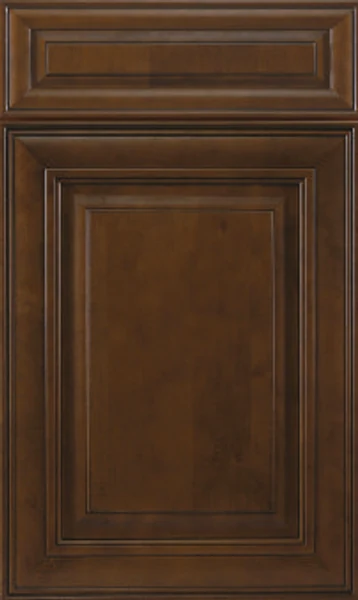
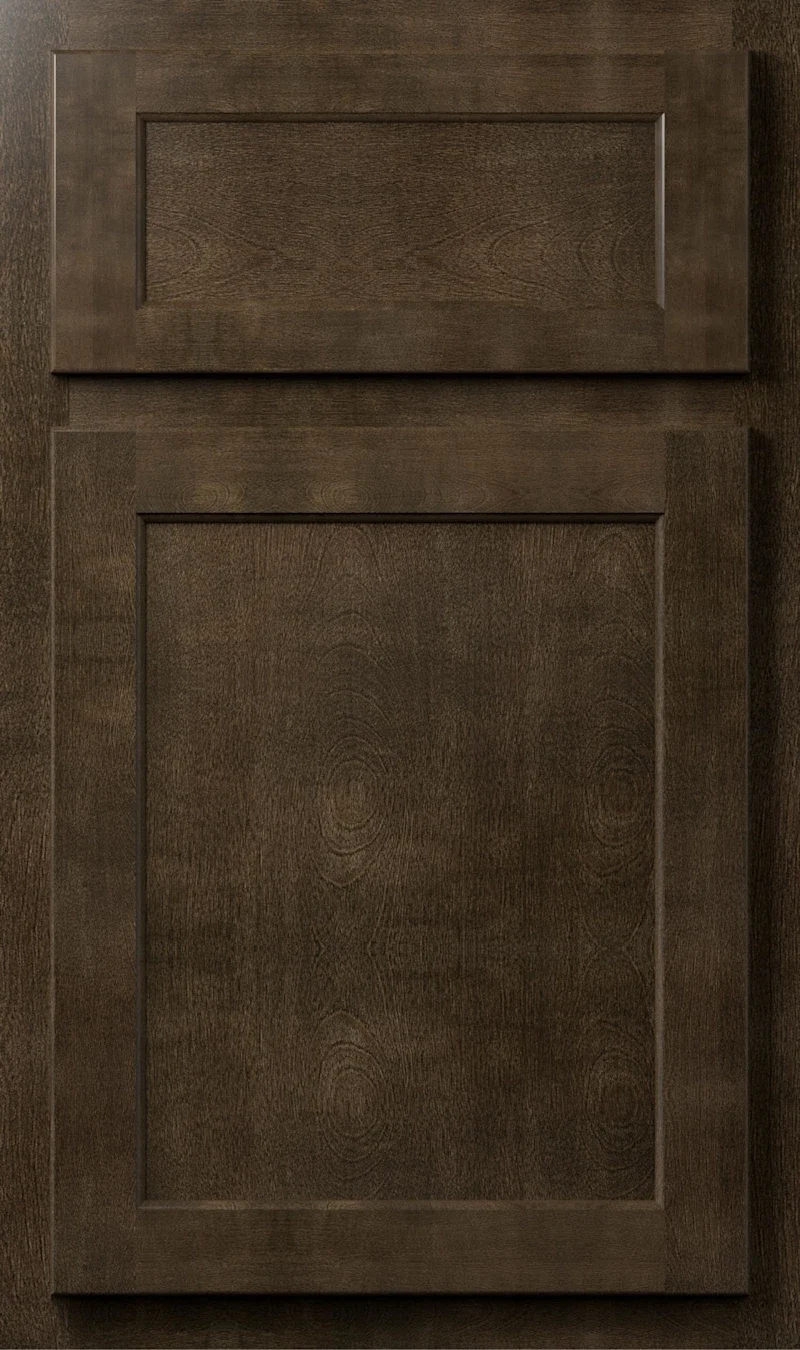
The value sits at the very bottom of the range — dark enough that in a photograph it can pass for black — but the undertone is unmistakably warm. There is red and a little orange under the brown, the color of strong coffee rather than soot. On the K8 door the stain pools slightly darker in the profiled edges of the frame and in the stepped bead around the panel, which is what keeps the face from looking like a flat cut-out.
North light is where dark stains get tested. In a room with only north-facing glass, Espresso loses most of its red and settles into a flat, cool near-black, so the kitchen depends on the counter and backsplash for brightness. South and west light do the opposite — late afternoon sun lifts the red out of it and the grain beneath the topcoat begins to show as faint darker streaking. Under warm bulbs it stays brown; under cool lamps it hardens.
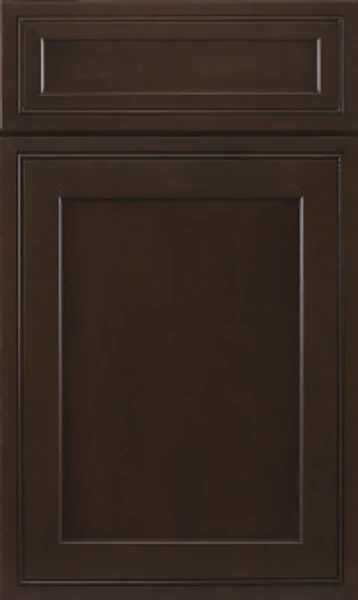
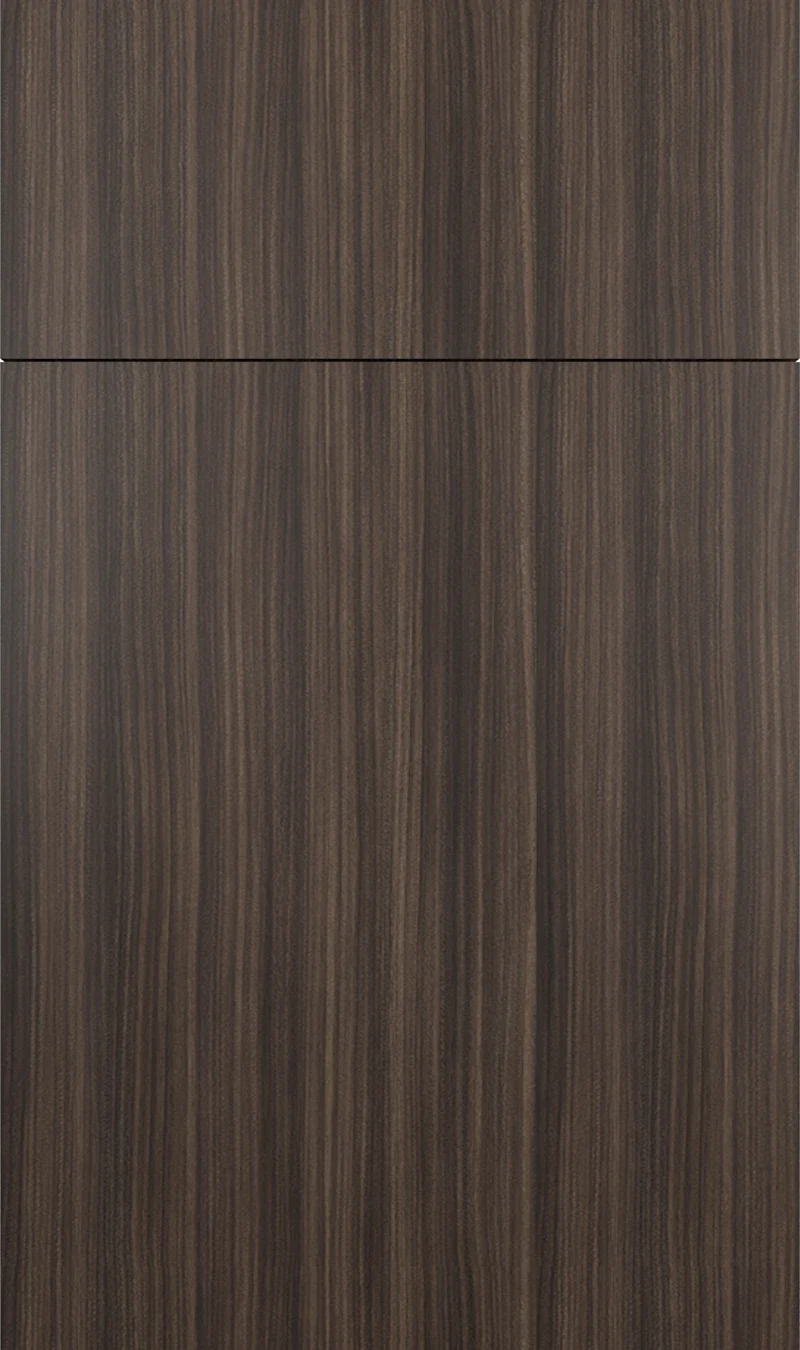
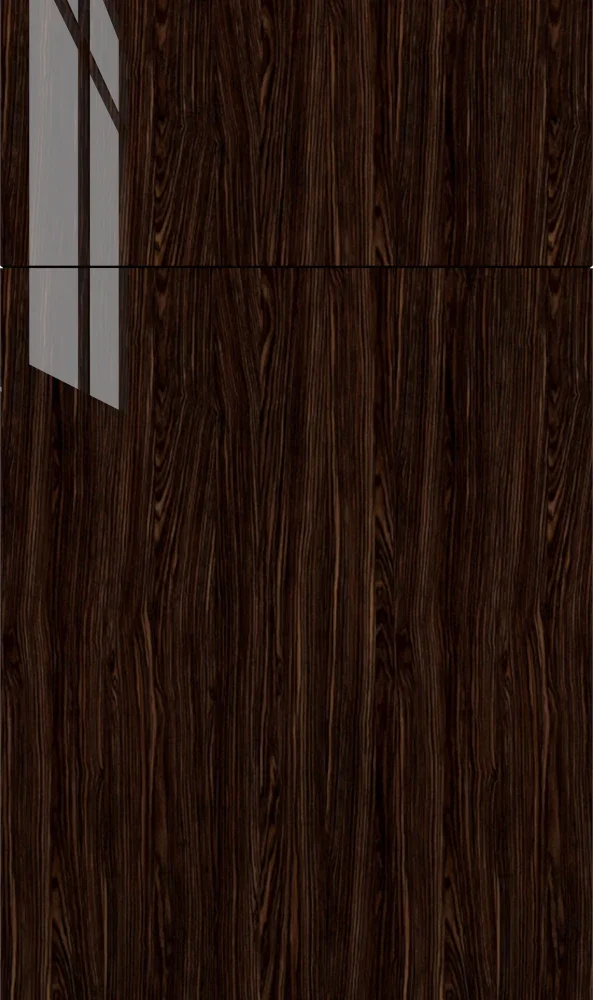
People often mistake it for a black paint until they see the two side by side. Against a true black, Espresso is visibly brown and a shade softer, with none of the deadness paint can have. The finish carries a low, even sheen that reflects window light as a broad soft band rather than a hard highlight, and the wood grain reads as texture you feel more than see — close and fine, with only occasional darker lines coming through.
Design & Profile
The frame does more work on this door than on a plain stepped front. The inner edge drops through a narrow flat, then rolls over a small bead before it reaches the recessed panel, so you see two parallel lines rather than one, with the stain settling into the groove between them. Rails and stiles are even and fairly wide. The drawer front repeats the same molding as a long narrow recess, and at each end the profile returns into a small notched corner instead of running straight out.
Those notched drawer corners and the doubled line at the panel edge are what pull this door toward traditional rather than plain, and they are most of what the eye has to hold on to from across a room. Each door is 3/4-inch solid wood, hung full overlay, so a stack of drawer fronts closes up with very little gap and the molding lines carry straight through from one front to the next. We would call it a good fit for a kitchen that wants detail without carving or applied trim.
Construction & Quality
J&K builds this cabinetry from 100% solid wood: a 3/4″ solid-wood full-overlay door, drawers of 5/8″ solid wood on all sides in dovetail construction, and a cabinet-grade plywood box with a clear-coated interior. Available as door style K8 in J&K’s Transitional range.
Doors run on 6-way adjustable, soft-close hidden Euro-style hinges, drawers on soft-close concealed undermount glides, and base cabinets carry corner-bracket reinforcements. The finish is hand-rubbed.
Where It Works
Full kitchens in Espresso work when the room has light to spend: a wall of windows, a patio door, or high ceilings. In a smaller or darker kitchen we usually split it — Espresso on the bases and island with something pale above — which keeps the weight at the floor and the sightline open. It is a natural fit for traditional and transitional rooms, and it holds its own next to heavy millwork that a lighter stain would disappear into.
Outside the kitchen it does some of its best work in small rooms that can afford to be dark. A powder-room vanity in Espresso feels deliberate rather than timid. So does a basement bar, a wall of office cabinetry, or a mudroom bench where scuffs are going to happen anyway. In a laundry room we would think twice, since lint shows plainly on dark doors, though a wipe every week or two settles that.
Pairing Ideas
Countertops
Espresso wants contrast overhead. Cambria Harlow or Cambria Berkshire Brass Satin Ridge, both bright white quartz, give the cleanest break and make the dark doors look deliberate rather than heavy. If you want the room warmer, Cambria Colton is a near-solid cream that softens the line, and Cambria Brittanicca Gold Cool brings marble-look veining with enough gold to echo the red in the stain.
Countertops we carry →Backsplash
Keep the wall light. MSI Antique White Glazed subway carries a little cream that flatters the warm stain, while MSI Aria Ice and MSI Carrara Matte read cleaner and cooler against it. For more surface interest, MSI UrbanSlat Maple in a 16x48 format gives long cream planks that break up a dark run of uppers without adding busy pattern.
Backsplash tile →Hardware
Warm metals read best on Espresso. The Berenson 128mm Champagne Bar Pull and the Swagger 96mm Modern Brushed Gold Pull both catch light on a dark door in a way brushed nickel does not. Berenson Swagger 160mm MDB in bronze is the quieter choice, close enough in tone that the hardware nearly disappears. Matte black vanishes almost entirely here, which some people want.
Pulls & knobs →Floors
Avoid matching. A mid-tone engineered or solid hardwood — anything a few shades lighter with visible grain — separates the cabinets from the floor and stops the bottom half of the room going solid brown. Gray-leaning LVP works and is the safer pick around a sink. Large-format porcelain or ceramic tile in a warm greige is the other reliable answer.
Flooring →Frequently Asked Questions

Plan a Kitchen in Espresso
Tell us about your room and we will help you decide whether Espresso is the right call, then design, order and install it.
Or call: (630) 733-7700