
Kemper · Door Style
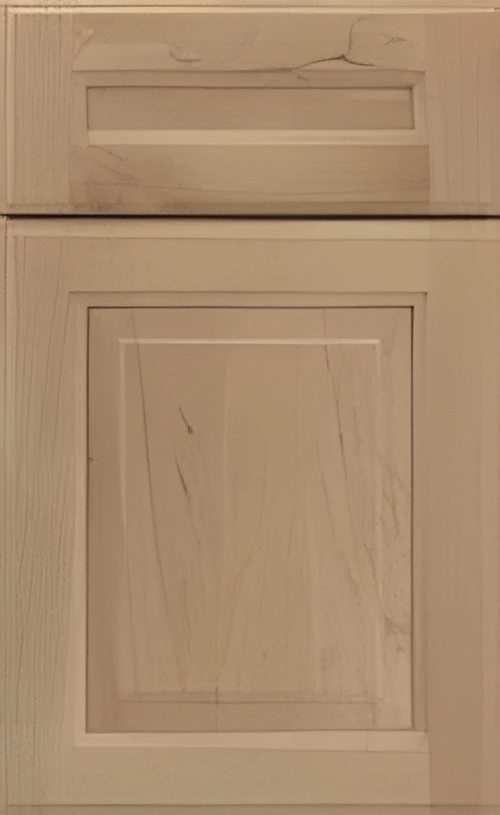
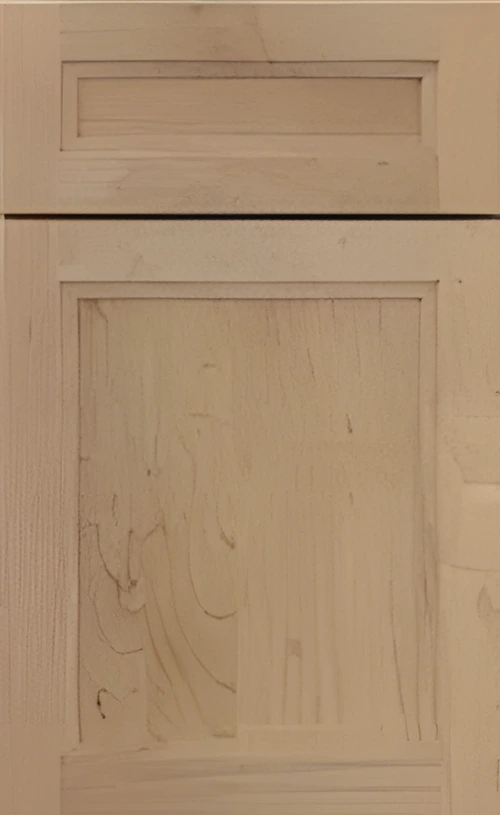
Kemper Pasco Cabinet Door
Offered in the Kemper Choice series
A classic raised panel, handled with restraint. The center field lifts from a sloped shoulder inside a frame that is profiled but not fussy, and the whole door reads warm rather than grand. It belongs in a traditional kitchen, and it does well in a rustic one when the species is doing the talking.
- Brand
- Kemper
- Series
- Choice
- Overlay
- Full overlay
Design & Profile
The panel is the feature. It rises from the recess on a long, even slope and flattens into a broad center field, so the middle of the door comes almost back to the plane of the frame. The frame’s inner edge is lightly shaped — a small step with a soft break rather than a deep cove — which keeps your attention on the panel itself rather than on the molding running around it.
Stiles and rails are moderate in width, and the panel takes up most of the door, which is what gives Pasco its full, settled look. The drawer front mirrors it: a raised center on a short format, with the slope compressed until the drawer reads almost like a narrow shaped molding. Shadow is soft and wide. The sloped shoulder catches a gradient rather than a hard line, so the door looks different at breakfast than it does in the evening.
Across a kitchen, Pasco gives traditional presence without weight. On a tall run it reads as a series of framed panels, which suits a room with trim, crown and a furniture-style island. It also carries rustic species well, where knots and color variation across a broad raised field become the main event. In a very small kitchen, keeping it to the lower cabinets is one way to use it without crowding.
Series & Construction
Pasco is a full overlay door, offered in the Kemper Choice series. Kemper lists it in Maple, Cherry, Oak, Rustic Alder and Rustic Hickory.
Kemper has been making cabinetry in America since 1926 and is part of the MasterBrand family. Choice carries Kemper’s construction into a wider range of door styles, a deeper palette of colors and finishes, and more functional storage. Kemper backs its cabinetry with a limited lifetime warranty; coverage and terms are set by Kemper.
Kemper shows Pasco as 5-Piece and Square.
Finishes
Paint on a raised panel does two things. It fills the small shaped break at the frame’s inner edge, deepening that line, and it skims across the slope, where the film stays thin and the light does the work instead. The effect in an off-white is a soft, dimensional door with no hard outlines anywhere on it. Glaze settles in the break and along the base of the slope, giving a traditional, lightly aged reading without obscuring the shape.
Stain is where the species choice matters most, because the panel is broad enough to show everything a board has. Oak brings open grain across the full field; rustic hickory and rustic alder bring knots and strong color shifts; maple stays quiet and even; cherry starts soft and deepens with age. On the slope itself, stain goes a shade darker as the surface turns away from the light.
Pairing Ideas
Countertops
The panel is already full, so a near-solid top usually works better than a heavily veined one. Cambria Fairbourne in cream or Vicostone Nuvolato in bright white both keep things calm. Cambria Ashbourne Matte, with its concrete look, is an interesting counterweight — it modernizes a traditional door without arguing with it.
Countertops we carry →Backsplash
Texture suits a shaped door more than pattern does. MSI Puebla Greige Pebble brings a tactile, irregular wall that sits well with knots and grain. MSI Ocotillo Blend Interlocking in cream gives shape at a small scale. If the kitchen needs lifting, MSI Scollopini Lilac Pattern Polished adds shine and a softer outline.
Backsplash tile →Hardware
Traditional hardware suits it. The Berenson Swagger 160mm in bronze and the Berenson Epoch Edge 128mm in vintage nickel both sit comfortably against a raised field. Knobs are worth considering on the doors with pulls kept to the drawers — on a panel this full, smaller hardware keeps the eye on the profile.
Pulls & knobs →Floors
Hardwood suits Pasco, particularly in a mid to warm tone that shares a family with the stain. If you are using a rustic species on the cabinets, let the floor be the calmer surface. Porcelain tile in a stone look works in a bath or a back hall, and LVP is the practical choice where water is routine.
Flooring →Frequently Asked Questions


Plan a Kitchen with Pasco
Tell us about your room and we will help you decide whether Pasco is the right call, then design, order and install it.
Or call: (630) 733-7700