
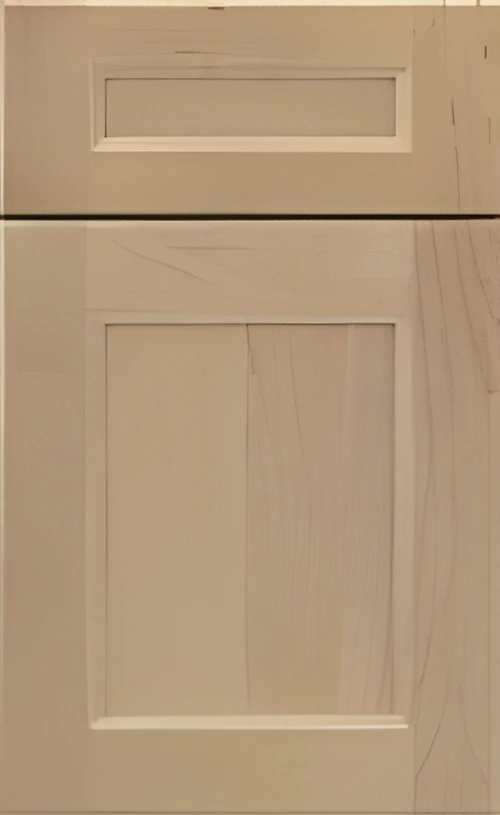
Kemper · Door Style
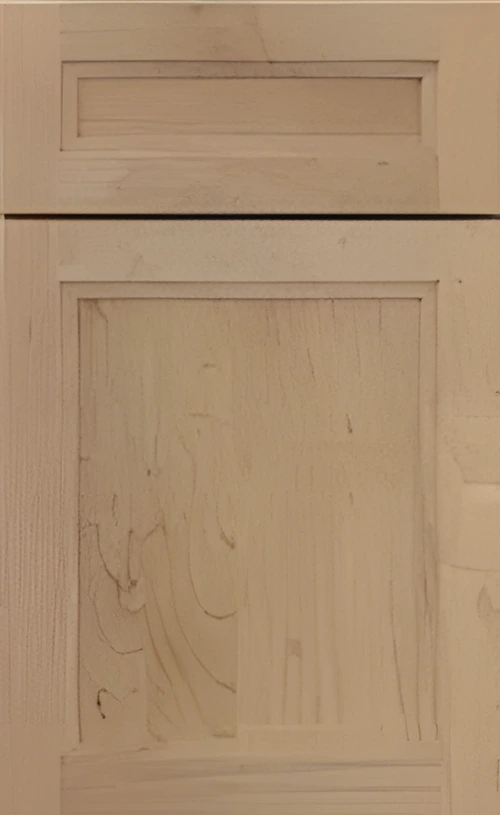
Kemper Justin Cabinet Door
Offered in the Kemper Choice series
Justin keeps its traditional detail at a low volume. The center panel lifts just enough to catch light, while the frame around it stays flat, square and quiet. It suits a kitchen that wants warmth without formality, and it sits easily beside older trim, newer appliances and the furniture already in the room.
- Brand
- Kemper
- Series
- Choice
- Overlay
- Full overlay
Design & Profile
The center panel is raised, but gently. It rises from a shallow shoulder rather than a deep cove, so the field reads as one soft plane with a thin band of shade around its edge. The frame is flat across its face and meets the panel at a square step, not a molded curve. Corners are cut square and butt together cleanly, which keeps the whole door reading as a rectangle first and a profile second.
Rails and stiles are even in width all the way around, so nothing in the frame pulls your eye to the top or the bottom. The drawer front repeats the door in miniature: the same flat frame, the same lifted field, scaled down to a narrow band. Because the shoulder is shallow, the shadow it throws is a soft gradient rather than a hard line, and it moves through the day as the daylight moves across the room.
Across a run of cabinets Justin reads as texture more than as pattern. From a few steps back you notice a quiet rhythm of panels; up close you see the step and the lift. That makes it a reasonable choice for a kitchen that opens to a dining or family space, where a louder profile would start to feel busy. It works on a bath vanity for the same reason — detail you register once, then stop noticing.
Series & Construction
Justin is a full overlay door, offered in the Kemper Choice series. Kemper lists it in Maple and Cherry.
Kemper has been making cabinetry in America since 1926 and is part of the MasterBrand family. Choice carries Kemper’s construction into a wider range of door styles, a deeper palette of colors and finishes, and more functional storage. Kemper backs its cabinetry with a limited lifetime warranty; coverage and terms are set by Kemper.
Kemper shows Justin as 5-Piece and Square.
Finishes
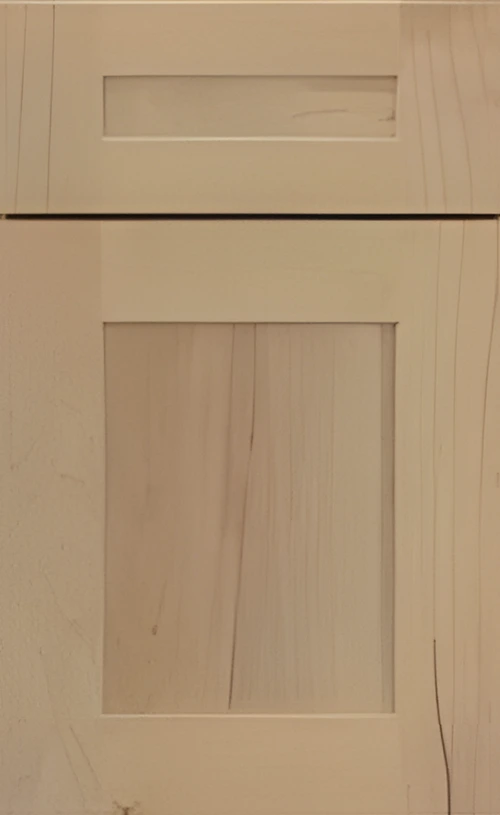
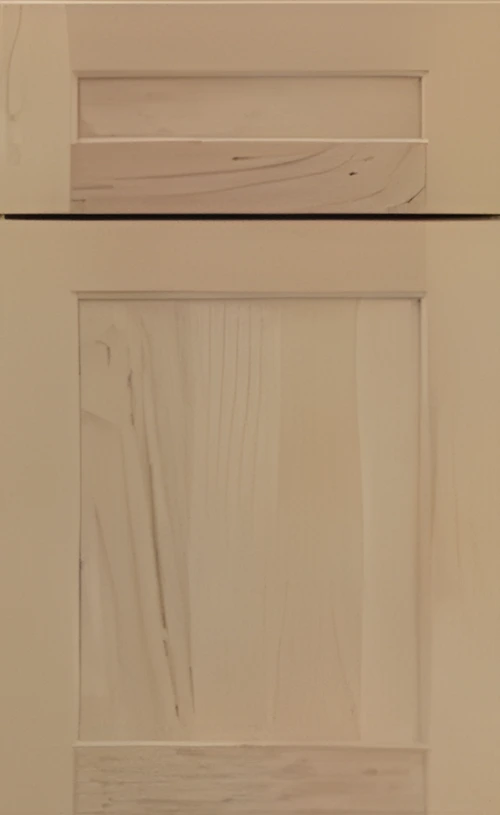
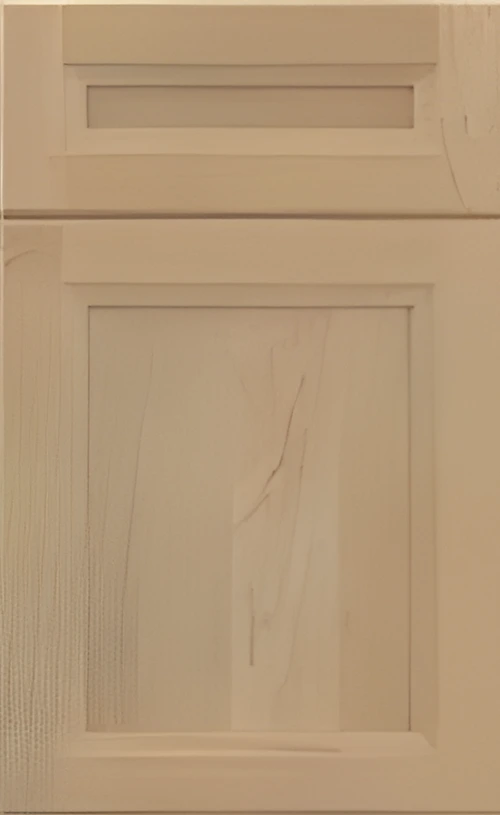
Paint sits down into the step at the panel edge and builds very slightly there, which darkens the line and makes the raised field read a little more clearly than it does in bare wood. A glaze has one place to settle — that same step — so it draws a single outline around each panel instead of a web of detail. Maple takes paint with almost no figure showing through, while cherry keeps a closer, warmer grain under a stain and deepens as the years pass.
Pairing Ideas
Countertops
A softly raised panel does not need a busy top. Cambria Berwyn, a cream quartz with marble-look veining, picks up the warmth in the profile without competing with it. For something brighter, Cambria Sandgate or Cambria Ruxley in bright white quartz keeps the counter flat and lets the panel edge do the work.
Countertops we carry →Backsplash
Small-scale tile suits this door. MSI Honey Comb Hexagon in cream echoes the softness of the shoulder, and MSI Greecian White Basketweave gives a traditional pattern that still reads calm. If you want the quietest option, MSI Renzo Sterling 3x12 in white lays flat behind the counter and leaves the cabinets alone.
Backsplash tile →Hardware
Medium-weight pulls suit the scale. The Berenson Bravo 56mm in brushed nickel is a sensible everyday choice, and the Berenson Epoch Edge 128mm in vintage nickel adds a little age without going ornate. If you want warmth instead, the Berenson 128mm Champagne Bar Pull sits well against the soft panel edge.
Pulls & knobs →Floors
Engineered hardwood is the usual answer here. It carries the same warmth the panel suggests and handles a kitchen’s temperature swings without complaint. Solid hardwood works if the subfloor allows it. In a mudroom or a bath, LVP or porcelain tile gives you a similar look with far less worry about standing water.
Flooring →Frequently Asked Questions


Plan a Kitchen with Justin
Tell us about your room and we will help you decide whether Justin is the right call, then design, order and install it.
Or call: (630) 733-7700