
Kemper · Door Style
Kemper Cotter Cabinet Door
Offered in the Kemper Choice and Emerge series
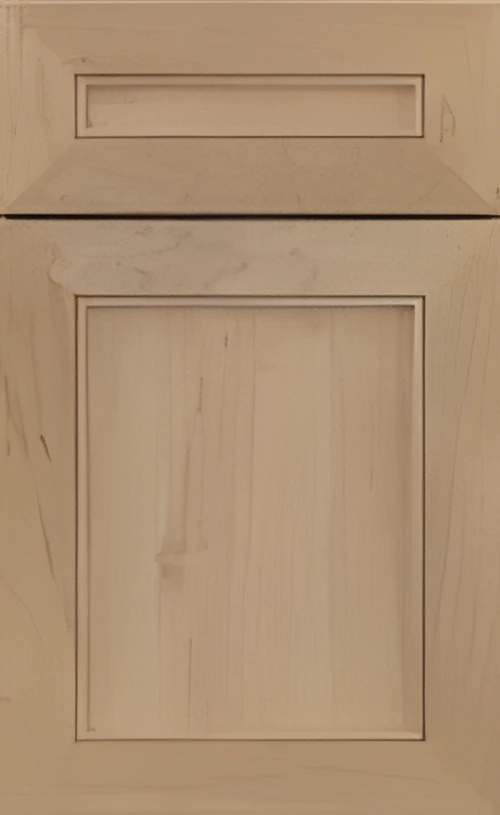
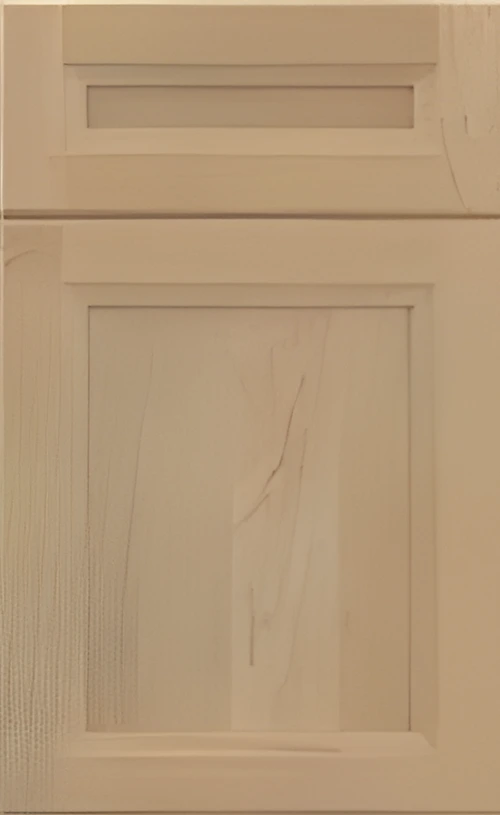
A flat recessed panel, a flat frame, and almost nothing between them but a fine dark line. Cotter is the shaker reduced to its essentials: no bevel, no step, no molding. It suits a transitional kitchen that wants structure without ornament, and it carries paint and stain equally well.
- Brand
- Kemper
- Series
- Choice · Emerge
- Overlay
- Full overlay
Design & Profile
The panel sits just below the face of the frame, and the reveal between the two is narrow — closer to a drawn line than to a channel. The inner edge is square with only the lightest ease on it, so there is no bevel to catch light and no cove to hold shade. What you get is a dark outline around a flat field, consistent on all four sides, with corners that read genuinely square.
Rails and stiles are moderate: wide enough to frame the panel properly, narrow enough that the field stays dominant. The drawer front uses the same construction in a short format, so the line around the drawer panel matches the line around the door exactly. Shadow is minimal by design. On a tall pantry run you see a ladder of thin rectangles rather than a series of framed shapes, which is precisely the point.
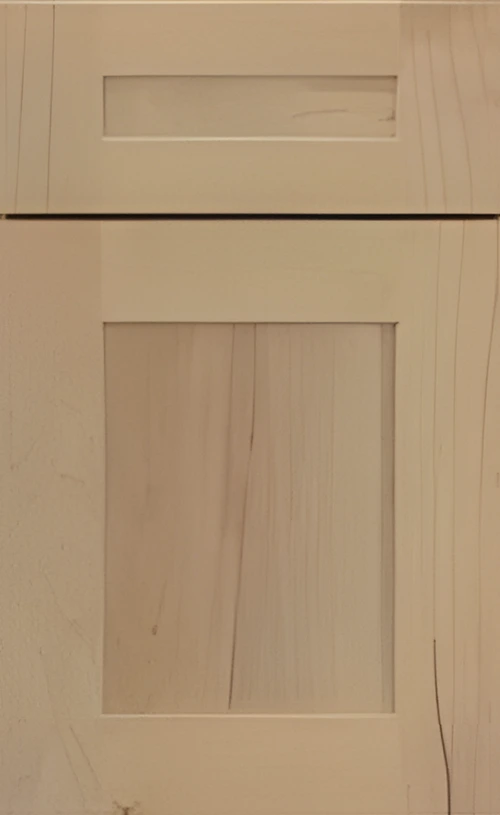
Because there is so little relief, Cotter changes character with its finish rather than with the light. In a white it nearly merges into the wall plane; in a deep stain the reveal becomes the strongest line in the room. That makes it a safe choice where cabinetry runs into a living area, and a practical one in a bath or laundry, where fewer edges means less to wipe down.
Series & Construction
Cotter is a full overlay door, offered in the Kemper Choice and Emerge series. Kemper lists it in Maple, Cherry, Oak, Walnut, Rustic Alder and Quartersawn White Oak.
Kemper has been making cabinetry in America since 1926 and is part of the MasterBrand family. Emerge is Kemper’s most personalized series: all-plywood construction, custom sizing, specialty finishes, stain and glaze options and multiple edge profiles. Kemper backs its cabinetry with a limited lifetime warranty; coverage and terms are set by Kemper.
Kemper shows Cotter as 5-Piece and Square.
Finishes
On a profile this shallow, paint has nowhere to build. The film stays even across the frame and the panel, and the reveal keeps its width instead of softening, which is why Cotter holds a crisp look in white and in color alike. A glaze has almost nothing to grab here. It will darken the reveal and little else, so expect a defined outline rather than an aged effect; a more profiled door will always show glaze better.
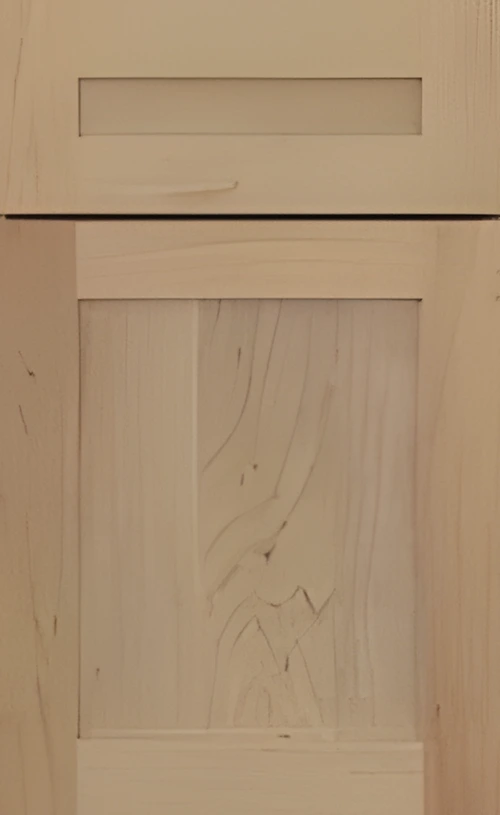
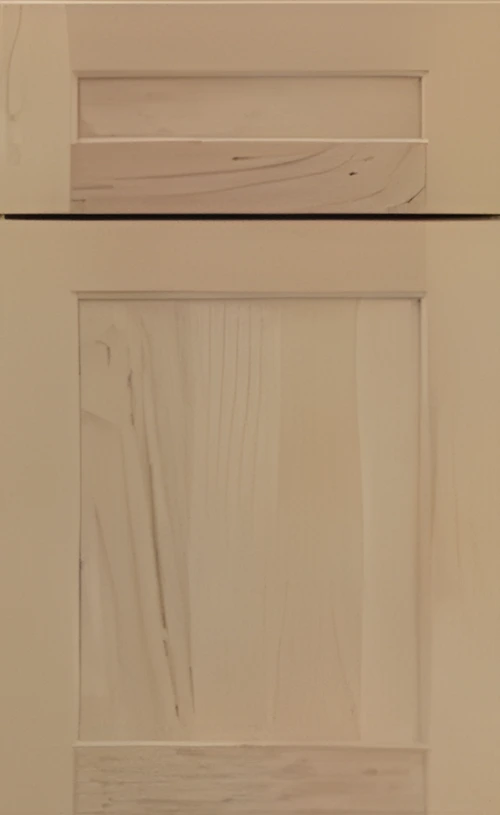
Stain is where Cotter gets interesting. With no molding to interrupt it, the grain runs the full height of the stiles and straight across the panel without a break. Quartersawn white oak shows its ray fleck plainly, oak gives strong open grain, and walnut goes rich and even. Rustic alder adds knots that become the only ornament on the door. Maple stays close-grained and quiet, and cherry darkens gradually with light.
Pairing Ideas
Countertops
With so little going on in the door, the counter can take the lead. Cambria Mayfair or Cambria Ivybridge, both with marble-look veining, give the room its movement. If you would rather keep everything calm, Cambria Warwick in cream or Cambria Bradwell in near-solid gray hold the line and let the reveal stay the sharpest detail.
Countertops we carry →Backsplash
Geometry pairs well with a square door. MSI Palisandro Chevron in polished white brings direction without pattern noise, and MSI Titan Interlocking adds a gray geometric that echoes the door’s right angles. For contrast, MSI Serenity Stone Pebble in cream softens the wall against all those straight lines.
Backsplash tile →Hardware
Straight pulls suit straight lines. The Berenson Metro 160mm in matte black reads as a drawn line against the reveal, and the Berenson Swagger 96mm in brushed gold warms the room without adding shape. If you want texture, the fluted and knurled pieces in the Richelieu Inspiration section give the hand something while the door stays plain.
Pulls & knobs →Floors
Cotter does not dictate a floor. Engineered hardwood in a wide plank balances the small rectangles of the door fronts, and large-format porcelain tile does the same in a bath. LVP is the practical pick for a basement kitchenette or a laundry, and laminate is worth a look if the room stays dry.
Flooring →Frequently Asked Questions


Plan a Kitchen with Cotter
Tell us about your room and we will help you decide whether Cotter is the right call, then design, order and install it.
Or call: (630) 733-7700