
Inset, Overlay, or Faux Inset? The Cabinet Decision Nobody Explains
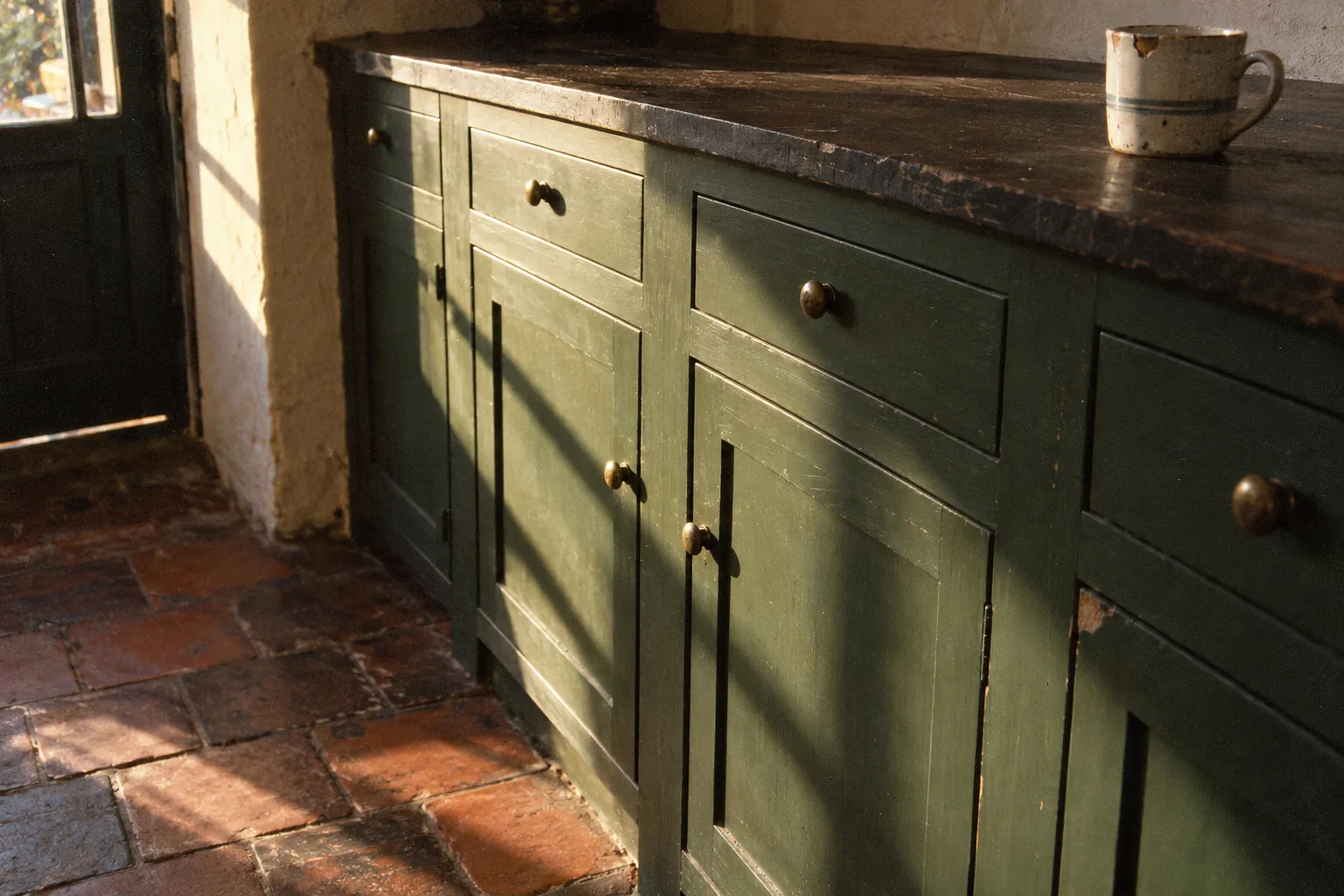
There’s a moment in almost every kitchen meeting where someone says the word “inset” and everybody at the table nods.
Half of them know what it means.
No judgment — it’s insider language, and nobody hands you a glossary before you remodel a kitchen. But this is genuinely one of the two or three decisions that most changes how your kitchen looks and what it costs. So let’s fix it in about four minutes.
The whole thing, in one idea
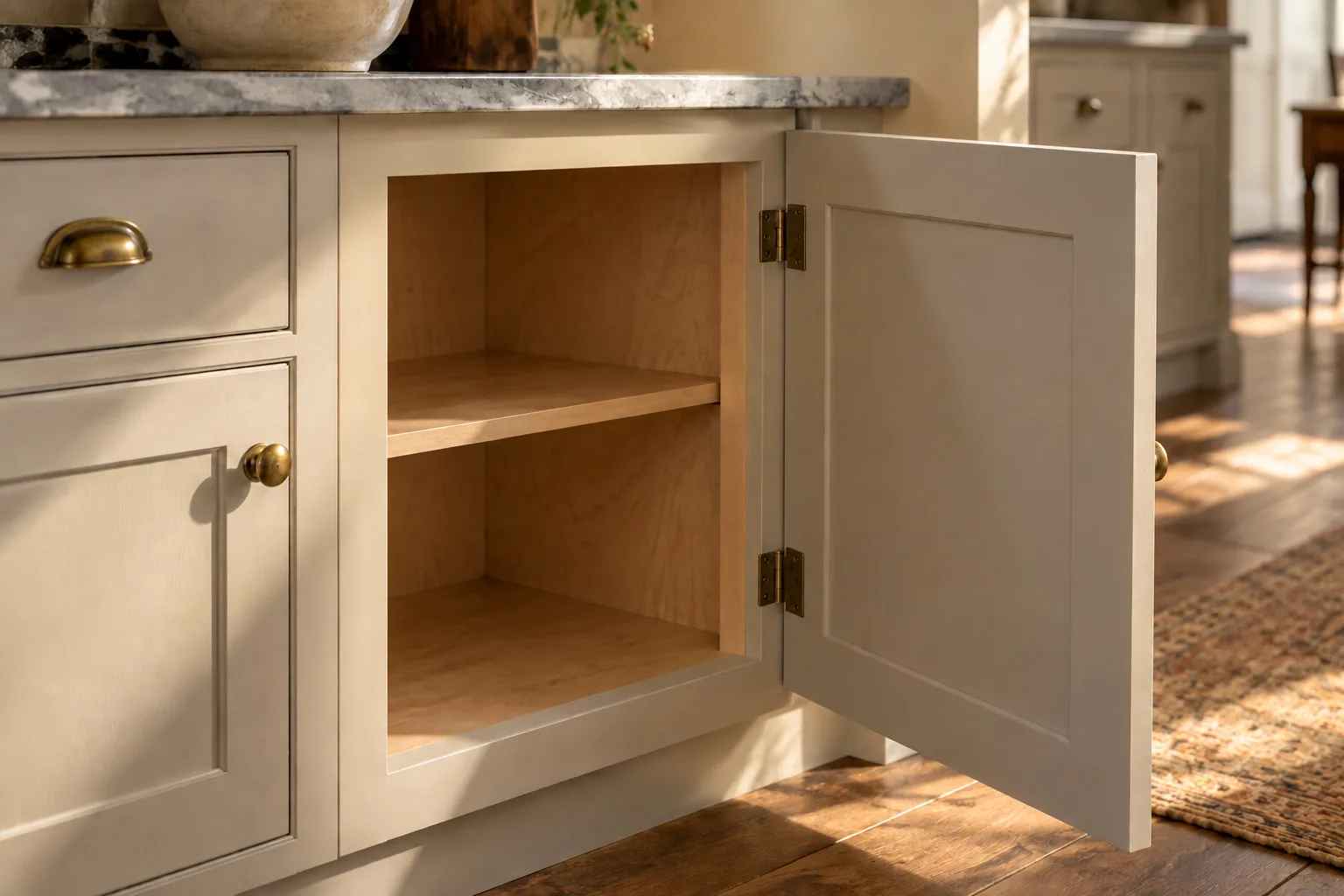
Look at the front of a cabinet. There’s a flat wooden frame there — like a picture frame glued to the front of a box. That’s the face frame.
Your door has exactly two options in life:
Lay over the frame. Or sit inside it.
That’s the entire debate. Everything else is detail.
(Side note for the curious: frameless cabinets — the European style — skip the face frame entirely. Different animal, different article.)
Meet the three contenders
1. Full Overlay — the crowd favorite
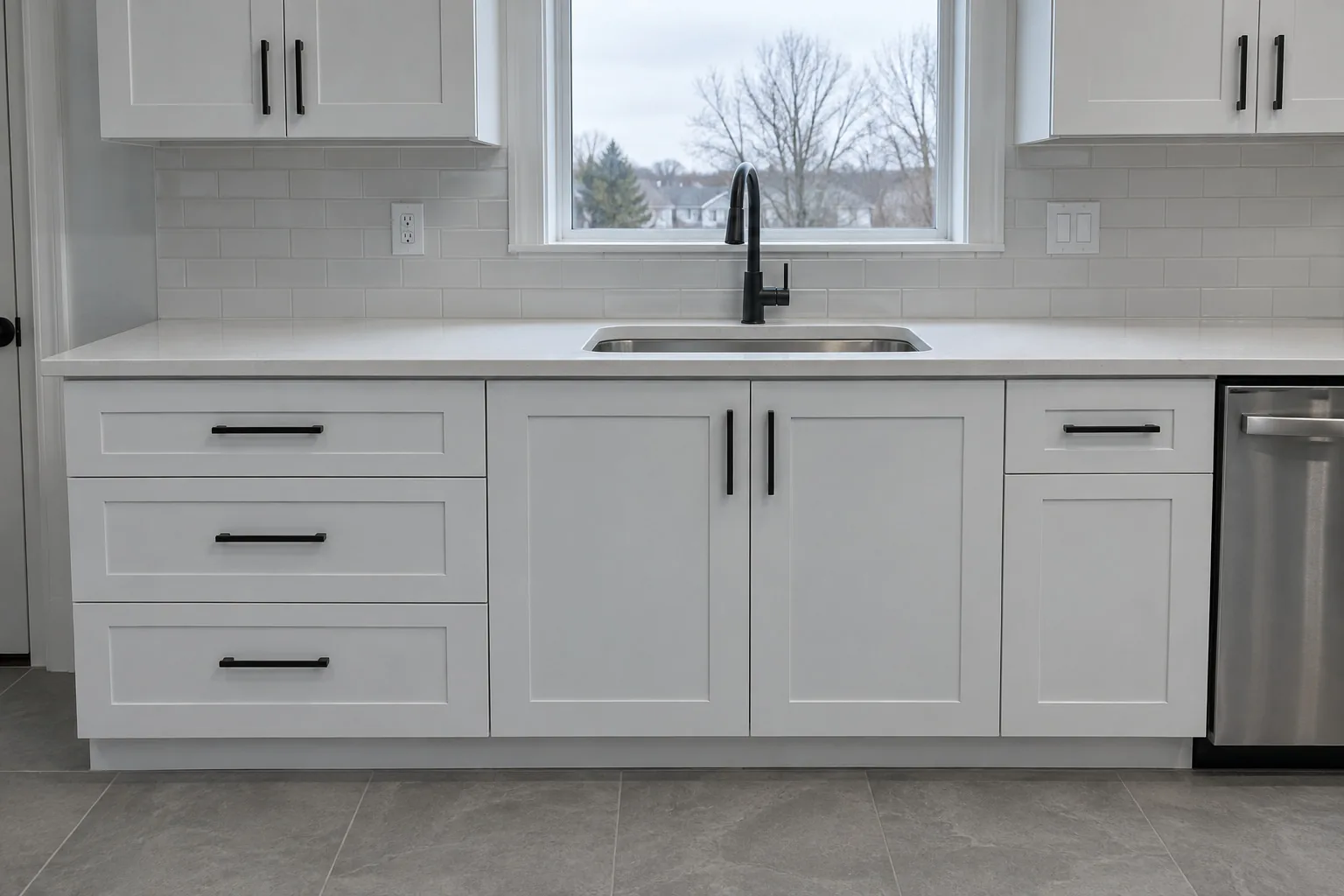
The door lays over the frame and covers almost all of it. Long, clean runs of door with thin shadow lines between them.
How much frame peeks out? About 1/4" to 1/2" — just a whisper. The gap between two neighboring doors is 1/8".
Why people pick it: It looks clean and current, the doors are as big as the cabinet allows, and it’s the best value of the three.
The honest knock: It’s also what’s in most new kitchens. Nothing wrong with that — but it won’t make anyone ask who built your kitchen.
In one sentence: the sensible, good-looking default.
2. Inset — the show-off (in a good way)
The door sits inside the frame, perfectly flush with the front. Run your hand across a good inset kitchen and doors and frame are one smooth plane.
This is how furniture is made. It’s the oldest approach here, and it’s the one people fall in love with in photos.
How much frame shows? A lot — 1 1/2" to 3". That generous frame is the look.
Inset comes in two personalities:
- Non-beaded — plain opening. Quieter, a little more modern.
- Beaded — a delicate bead of molding traces each opening. More traditional, more shadow, more jewelry.
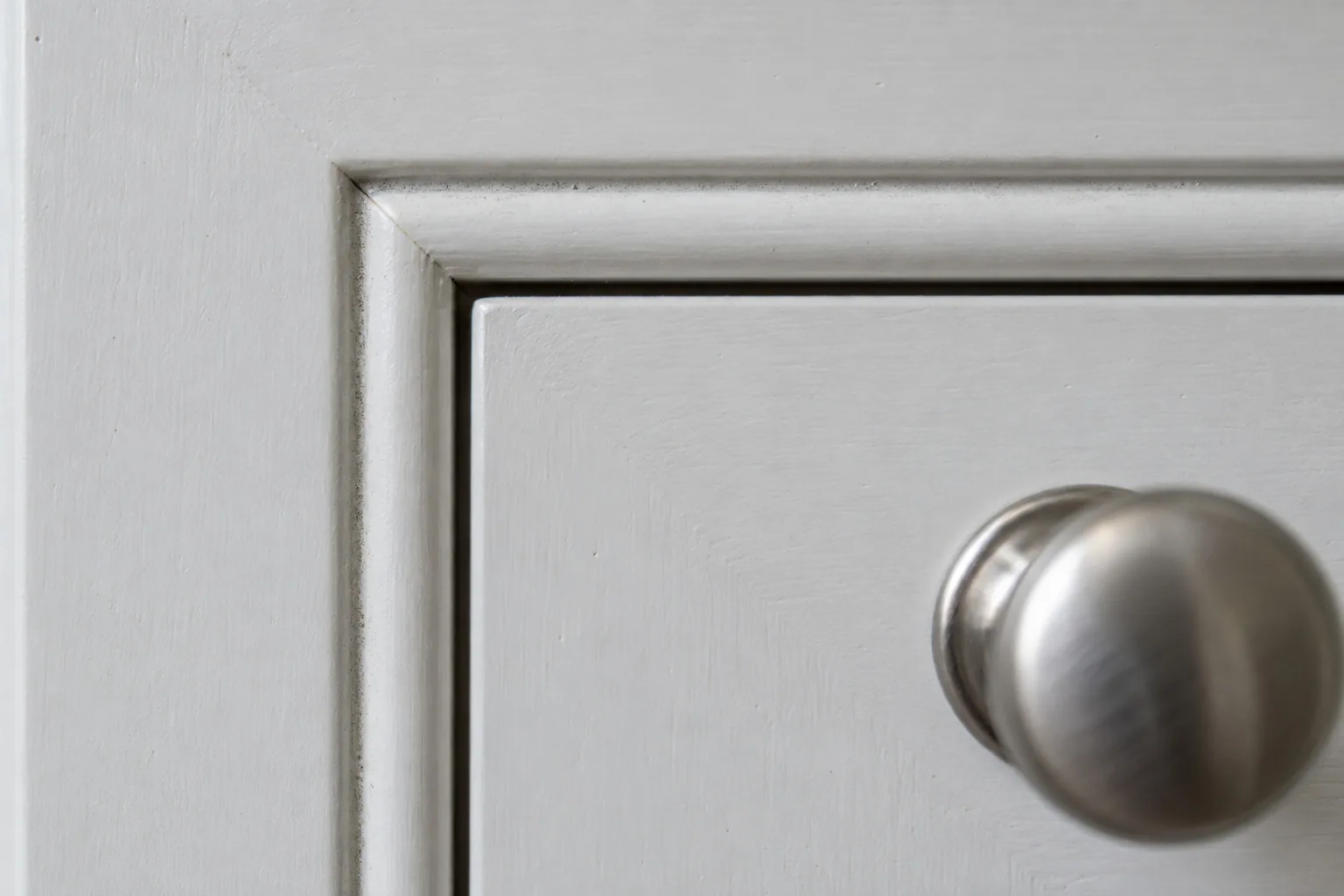
In one sentence: the one that makes people touch your cabinets.
3. Faux Inset & Modified Overlay — the clever middle
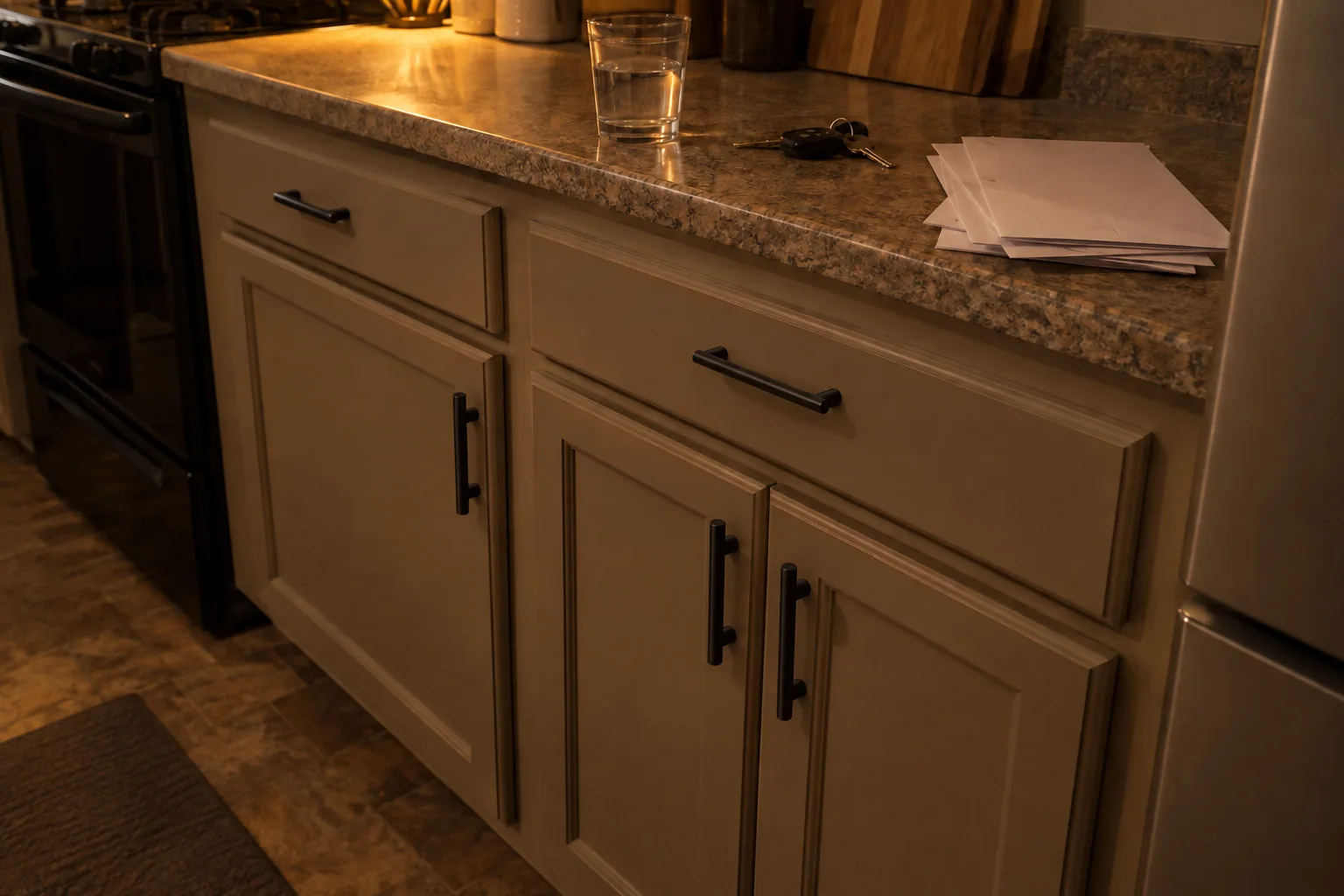
Faux inset is a door shaped with a stepped edge so it reads inset — you get the shadow, the depth, the recessed look — while it’s still technically an overlay door.
Modified overlay comes at it from the other side: an overlay door sized to show more frame (about 1" at the top) so the kitchen has more structure and rhythm than standard overlay.
In one sentence: most of the look, less of the damage.
The plot twist nobody mentions
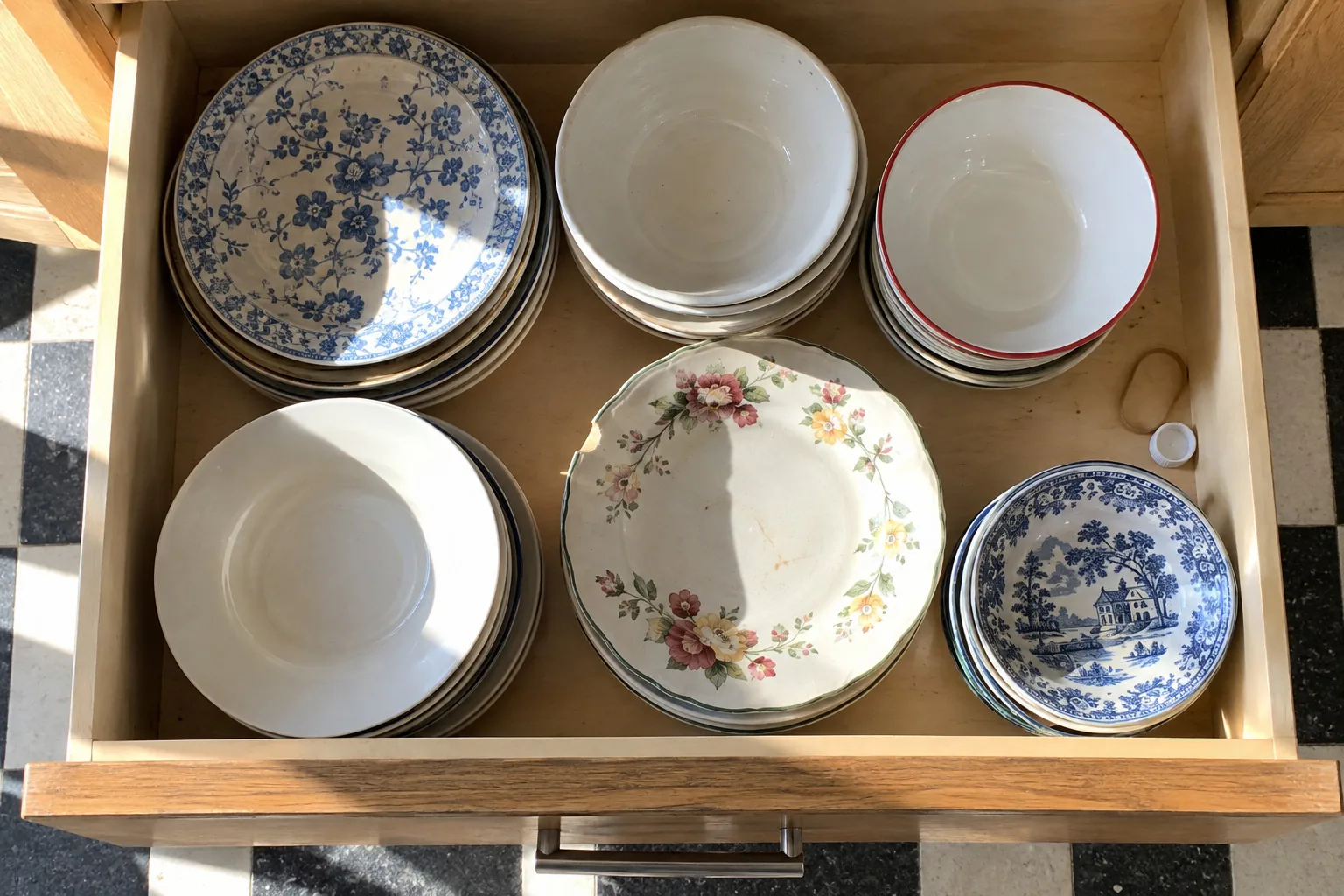
Here’s the part that never comes up in a showroom, and it absolutely should.
An inset door has to fit inside the frame. Which means it’s smaller. On the same exact cabinet.
Not “a hair smaller.” Here’s the real math:
| Same cabinet | Overlay door | Inset door |
|---|---|---|
| 12" wide | 11 1/2" | 8 13/16" |
| 24" wide | 23 1/2" | 20 13/16" |
| 30" tall wall cabinet | 29 1/2" | 26 13/16" |
| Same cabinet | Overlay drawer | Inset drawer |
|---|---|---|
| Standard base drawer | 6 1/4" high | 4 13/16" high |
See the pattern? Widths lose a consistent 2 11/16" — every door, every drawer front. Drawer heights lose a little less, about 1 7/16", but stack three or four drawers and it adds up fast.
On a 12" cabinet, that’s the difference between one that swallows your stand mixer and one that politely declines.
This is not a reason to skip inset. It’s a reason to know before you fall in love. If your kitchen is already tight on storage, this belongs in the conversation on day one — not after we’ve drawn it.
The fine print, speed round
Not every door can be inset. In the Kemper Emerge line we carry, there are 26 door styles. Exactly eight come in inset. Fall for the wrong door and you’re choosing between the door and the look.
Inset costs more. More frame material, tighter tolerances, more labor building it and more installing it. If someone quotes you the same price for both, ask what you’re actually getting.
Inset is unforgiving. With overlay, a door can drift a sixteenth and nobody notices — there’s no reference line. With inset, every gap is the reference line, and your eye catches it instantly. In an older home with walls that aren’t quite plumb, that’s real work. It’s exactly why good inset looks expensive and sloppy inset looks wrong.
Wood moves. Wood expands and contracts with humidity — that’s wood being wood, not a defect. Overlay hides it completely. Inset has tight gaps by design, so a door that shuts perfectly in February may feel snug in August. Good inset accounts for it. Still worth knowing before August.
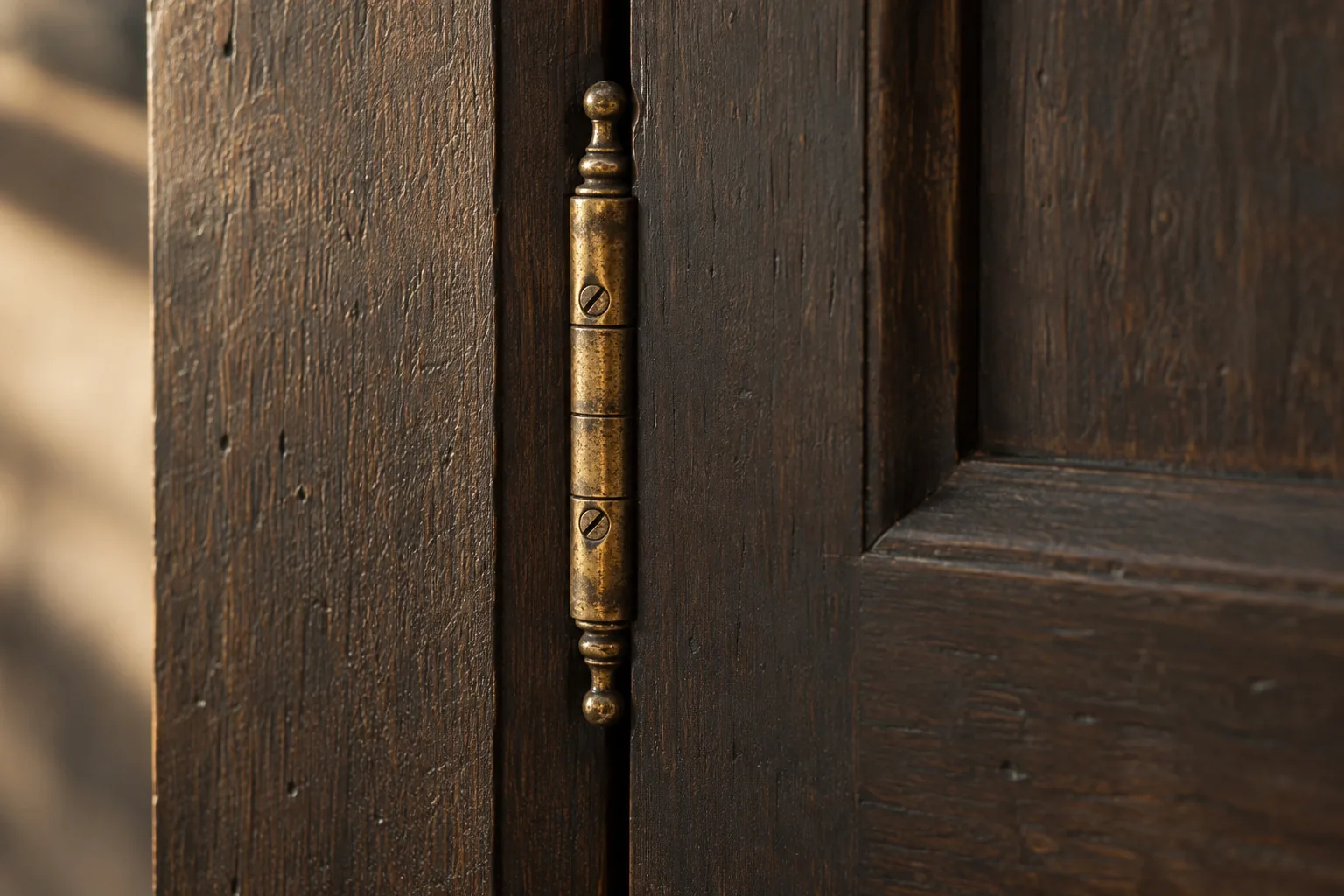
Hinges become jewelry. Inset opens the door to beautiful exposed hinges — even decorative finials, matte black included. With overlay they’re hidden and you never think about them again.
So… which one are you?
You want clean, current, and the most storage for the money.
→ Full overlay. Genuinely the right answer for most kitchens, and there’s no shame in the sensible choice.
You want your kitchen to feel like furniture, and you’ve got the budget.
→ Inset. It’s real character that doesn’t go out of style. Just go in with your eyes open about the drawer sizes.
You love the inset look but the budget (or the storage math) is raising an eyebrow.
→ Faux inset or modified overlay. This is what we end up recommending most often, and hardly anyone regrets it.
The only bad version of this decision is picking inset because it sounds like the fancy option, then being blindsided by the price, the smaller drawers, or a door that gets moody in humid weather.
Inset is wonderful. On purpose.
Come put your hands on it
Genuinely — this is a decision that photos are bad at. The whole difference lives in a shadow line, and screens flatten shadow lines.
Come by our Wheaton showroom. We’ll set the same door in front of you in inset and overlay, tell you plainly what each one costs, and show you the actual opening sizes for the cabinets you’re planning. Ten minutes and you’ll know exactly which one you are.
See the same door in inset and overlay
Ten minutes in our Wheaton showroom and you’ll know exactly which one you are. No pressure, no obligation.
Book a Free ConsultationMeasurements here come from the Kemper Emerge Price & Specification Guide, June 2026. Specs vary by manufacturer and line and do change — we’ll confirm the current numbers for your cabinets before anything is ordered.